• The Unanswered “Why” of the Liturgical Reform

    The Unanswered “Why” of the Liturgical Reform

    One of the central failures of the liturgical reform of the 1960s was not change itself, but the absence of explanation.

    Vatican II clearly called for a reform of the liturgy. That is not in dispute. Sacrosanctum Concilium explicitly authorized revision of the rites, simplification, and a greater intelligibility for the faithful.[i] What remains largely unexplained is why the reform took the particular shape it did, especially when the interim Missal of 1965 already implemented many conciliar directives.

    The Council itself imposed limits. It insisted that rites “be distinguished by a noble simplicity,” and that nothing new be introduced “unless the good of the Church genuinely and certainly requires it.”[ii] Reform was to proceed organically from existing forms, not through wholesale reconstruction.[iii] Yet the most visible changes affecting the faithful went far beyond modest simplification.

    The problem is not simply that things changed. It is that the Church rarely explained why particular changes were better.

    (more…)
  • Paul VI and the Liturgical Reform: Documented Papal Interventions in the Novus Ordo

    Paul VI and the Liturgical Reform: Documented Papal Interventions in the Novus Ordo

    I often come across different stories of matters that Pope Paul VI intervened in regarding the reform of the liturgy to prevent certain traditional elements from being cut.

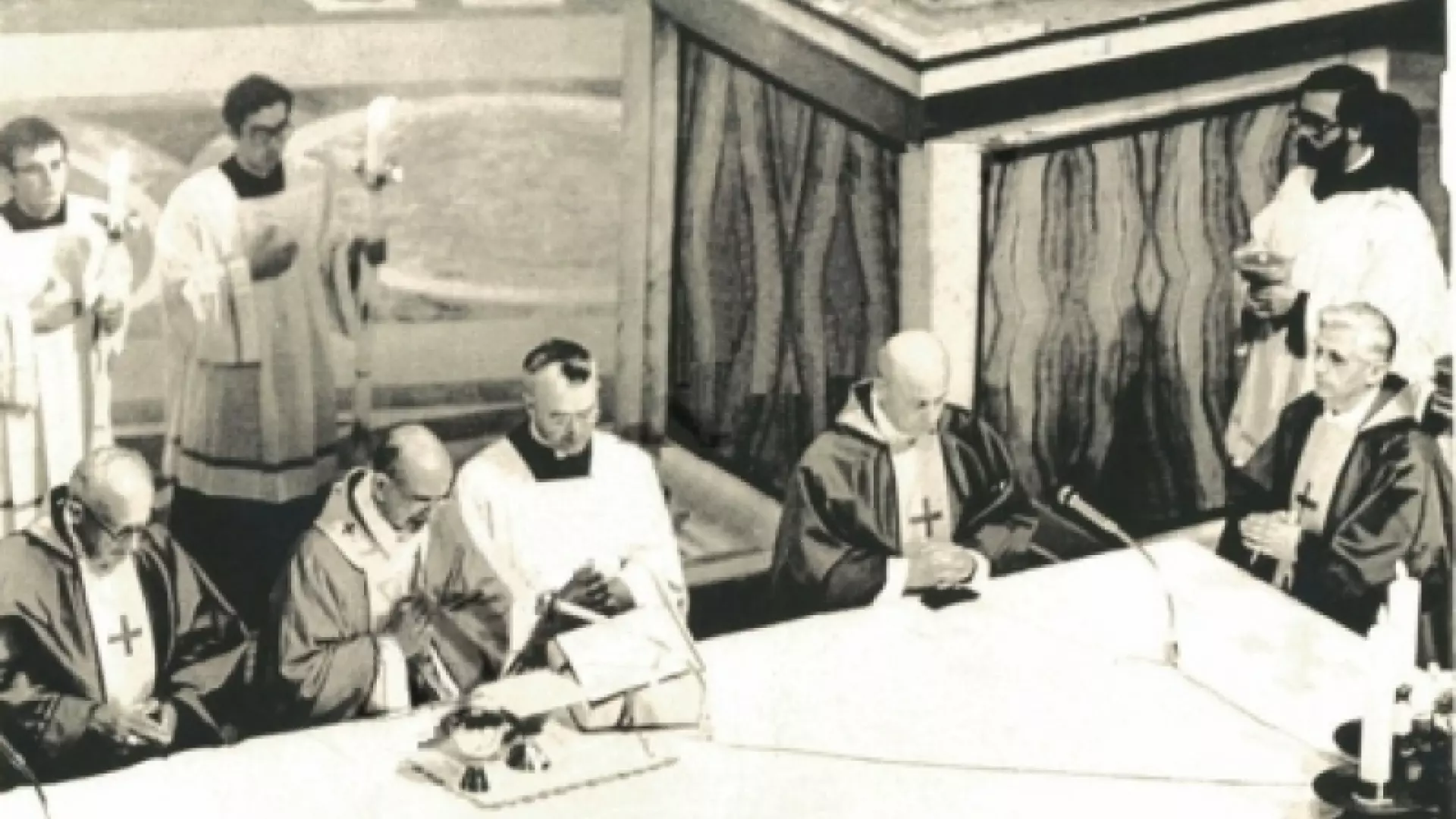
    Dom Alcuin Reid asserts that Pope Paul VI personally intervened during the preparation of the 1969 Ordo Missae to insist on the retention of the sign of the cross at the beginning of Mass, a Confiteor, the Orate fratres, and the Roman Canon. Reid presents this as a corrective to the more radical “normative Mass” drafts circulating prior to the 1967 Synod of Bishops, though he does not cite specific documentary evidence for these interventions in his article.[i]

    I wanted to start with Dom Reid’s list because it provides a short list that can be verified. Dom Reid is a serious liturgical scholar, and it is possible that he has access to schemata or archival materials not readily available. Nevertheless, his list provides a useful starting point for claims that can be tested against the published documentary record. In the course of examining these claims, I also identified additional instances of papal intervention or preference not mentioned by Reid but documented elsewhere in the contemporary sources; these are included here and categorized according to the same evidentiary standards. That said, I am going to approach this by grouping these claims into different categories. 1) Documented Papal Interventions, 2) Plausible but Inferential Interventions, 3) Requested but Not Retained, and while not tied to Dom Reid’s article, 4) Documented Papal Dissatisfaction.

    (more…)
  • Why Ordered Worship Works for Me as an Autistic Catholic

    Why Ordered Worship Works for Me as an Autistic Catholic

    First a Disclaimer: This essay explains why ordered worship works for me as an autistic Catholic, not a claim that it must work the same way for everyone.

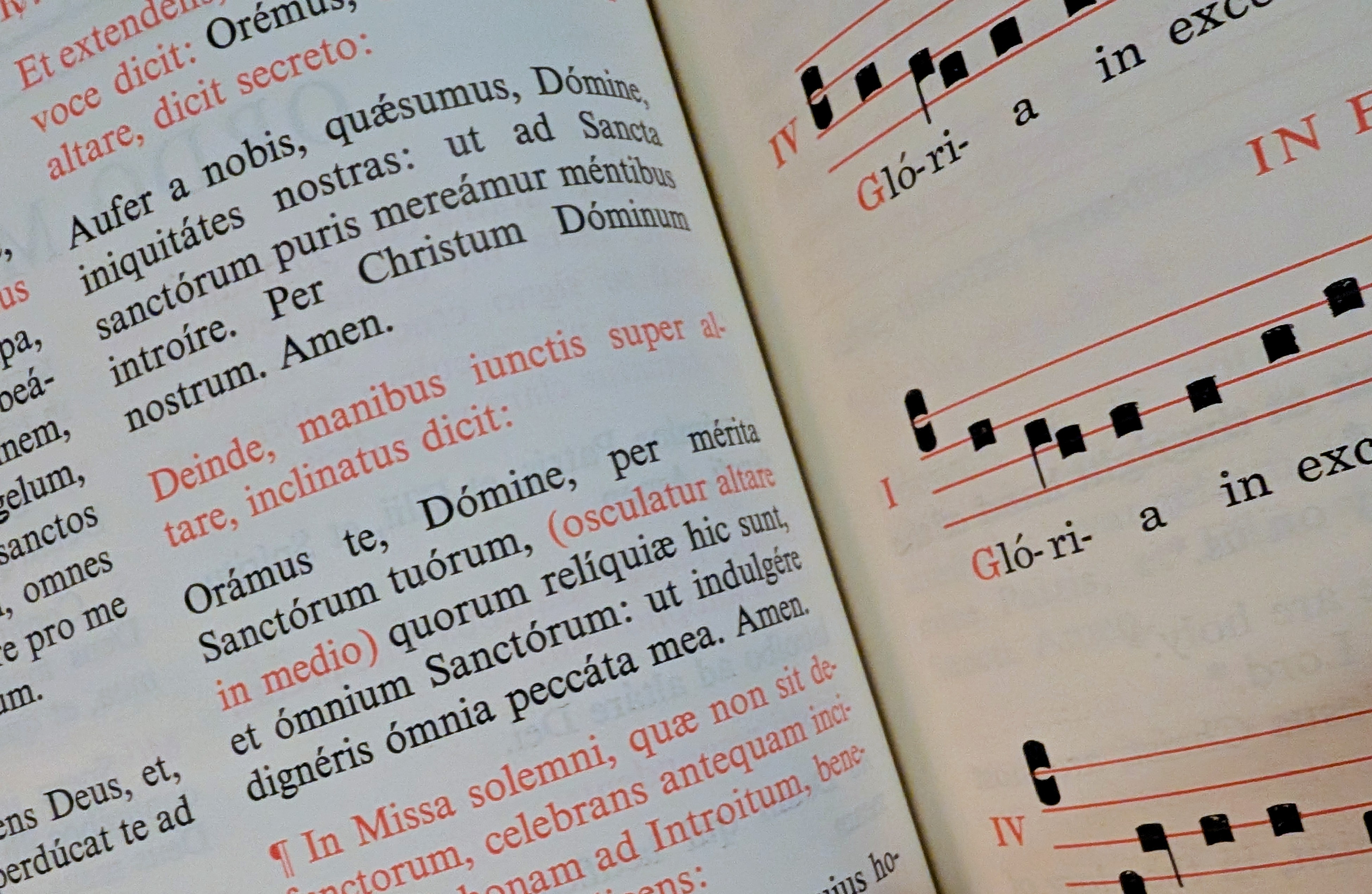
    I have always been fascinated with the liturgy from a young age. My first memory of Mass was thinking, “Why does this priest love 1970s green so much?” I grew up in a pretty nominally Catholic family. We went to church on Sundays and at Christmas. I do not recall ever going on holy days of obligation. I remember hearing the priest chant the final doxology, “through him, with him, in him,” and wondering what it must have sounded like in medieval times to hear monks chant it. Then I discovered my mom’s 1965 transitional hand missal. I was shook. The Mass as I knew it was vastly different from what my mom had grown up with.

    (more…)
  • Quiet Repairs: Small Liturgical Changes That Could Restore Reverence in the Novus Ordo

    Quiet Repairs: Small Liturgical Changes That Could Restore Reverence in the Novus Ordo

    Many traditionally minded Catholics assume that the “Reform of the Reform” is effectively dead.  As a result, most proposals for reform focus on highly visible changes to make it similar to the TLM: ad orientem, chant, the suppression of Communion in the hand, the elimination of extraordinary ministers of holy communion, or only using the Roman Canon, etc.

    These proposals all concentrate on what the congregation sees and hears: posture, music, language, and distribution. Implemented top-down, they would almost certainly provoke resistance from both clergy and laity. The present generation has little living memory of the pre-Vatican II rite, and abrupt external changes risks accusations that Rome is attempting to reverse the Council.

    There is an easier path, and one more likely to bear fruit over time. It focuses on the priest and deacon first, not the people. It accepts the structure of the current Roman Missal while quietly re-forming the sacred ministers’ understanding of who they are and what they are doing.

    Most of what follows does not alter lay participation. Little of it requires catechesis. These are internal, clerical changes that would slowly reshape how the Mass is understood and celebrated from the altar outward.

    (more…)
  • A Modest Proposal for the Straw Subdeacon

    A Modest Proposal for the Straw Subdeacon

    Since the suppression of the subdiaconate and minor orders in 1972, the Church has retained only two instituted ministries for laymen: Acolyte and Reader. The Latin Mass rubrics still assume the older structure of major and minor clerics, including the restrictions on a minor cleric serving as a straw subdeacon. That clerical system no longer exists outside of former Ecclesia Dei communities.

    (more…)
  • Who Can Serve as a Latin Mass Straw Subdeacon?

    Who Can Serve as a Latin Mass Straw Subdeacon?

    The Subdeacon is an ancient order of the Roman Catholic Church. While not as ancient as Bishop, Priest, and Deacon, it shows up in the writing of bishops early on in church history.  A letter of Pope Cornilius makes mention of the sub-deacon by the mid-3rd century.[i] This is the earliest known reference to the subdeacon and given that they are referenced around 251 AD, it is safe to presume that they predate that by sometime as they are not mentioned as something new or alien to a bishop who would be reading the letter.

    For the next 1721 years the subdeacon would exist in the Roman Church before Pope St. Paul VI suppressed the Order of Subdeacon in 1972 with this Moto Proprio Ministeria quaedam.[ii]There is some debate if the subdeacon still exists in the Latin Church. However, Rome as late as 2018 while acknowledging that they were not cleric’s, did seem to implicitly suggest that the Order of Subdeacon still exists, even if it is outside the modern canonical structure.[iii]

    (more…)
  • Where Did the Subdeacon’s Duties Go? A Closer Look at Ministeria Quaedam

    Where Did the Subdeacon’s Duties Go? A Closer Look at Ministeria Quaedam

    When Pope Paul VI issued Ministeria Quaedam in 1972, he stated:

    “The functions heretofore assigned to the subdeacon are entrusted to the reader and the acolyte.”

    At first glance, this appears to suggest a simple redistribution of duties. The functions of the subdeacon would now be carried out by the reader and the acolyte. However, the reality of the liturgy after Ministeria Quaedam tells a different story.

    In practice, many of the subdeacon’s traditional responsibilities were not taken up by the lay ministries of Acolyte or Reader. Instead, they were taken over by the deacon. The chart below summarizes where each of the subdeacon’s duties actually ended up:

    (more…)
  • When I Can’t Find the Words, the Church Lends Me Hers

    When I Can’t Find the Words, the Church Lends Me Hers

    Sometimes prayer comes easily, and sometimes it feels impossible. There are days when I cannot find the right words — or any words at all — to speak to God. Yet even on those days, the Church gives me the words to express thoughts and longings that I would otherwise struggle to voice.


    I sometimes have the privilege of assisting at a Traditional Latin Mass as a straw subdeacon. As I prepare to serve, I often feel a mixture of awe, hyper-focus on the task at hand, and human distraction. In those moments, when the heart feels too full or the mind too scattered, the Church provides the answer: Introibo ad altare Dei — ‘I will go to the altar of God.’


    This simple yet profound line sets the tone for everything that follows. Even when I feel uncertain or overwhelmed, the ancient prayer places me where I need to be: in the presence of God, guided by the words of countless generations before me.

    (more…)
  • The Role of the Subdeacon in the Early Novus Ordo Mass

    The Role of the Subdeacon in the Early Novus Ordo Mass

    Paul VI’s new order of Mass went into effect on the First Sunday of Advent, 1969. At that time, there were still three major orders in the Catholic Church: Priest, Deacon, and Subdeacon. The office of the Subdeacon was not formally suppressed until January 1, 1973. For about two years, there was a curious overlap, the new Missal was in use, yet the Subdeacon remained.

    It has always been a great matter of curiosity to me what role the Subdeacon had in the revised Mass. It is often assumed that the Subdeacon must have had little or no responsibilities in the Novus Ordo. However, this is not the case. While his role was not as pronounced as in the Traditional Latin Mass, the Subdeacon had distinct and meaningful duties in the early Ordinary Form.

    (more…)
  • Why We Pray for the Dead — Even the Pope

    Why We Pray for the Dead — Even the Pope

    How we pray as a Church shapes what we believe as a Church. During the reforms of the funeral rites after Vatican II, many changes were made. The most striking was the removal of the sequence Dies Irae.

    Some argue that the language of the Dies Irae was too harsh, not hopeful enough, and should have been excised. But take a moment to read it—it is striking and powerful:

    (more…)